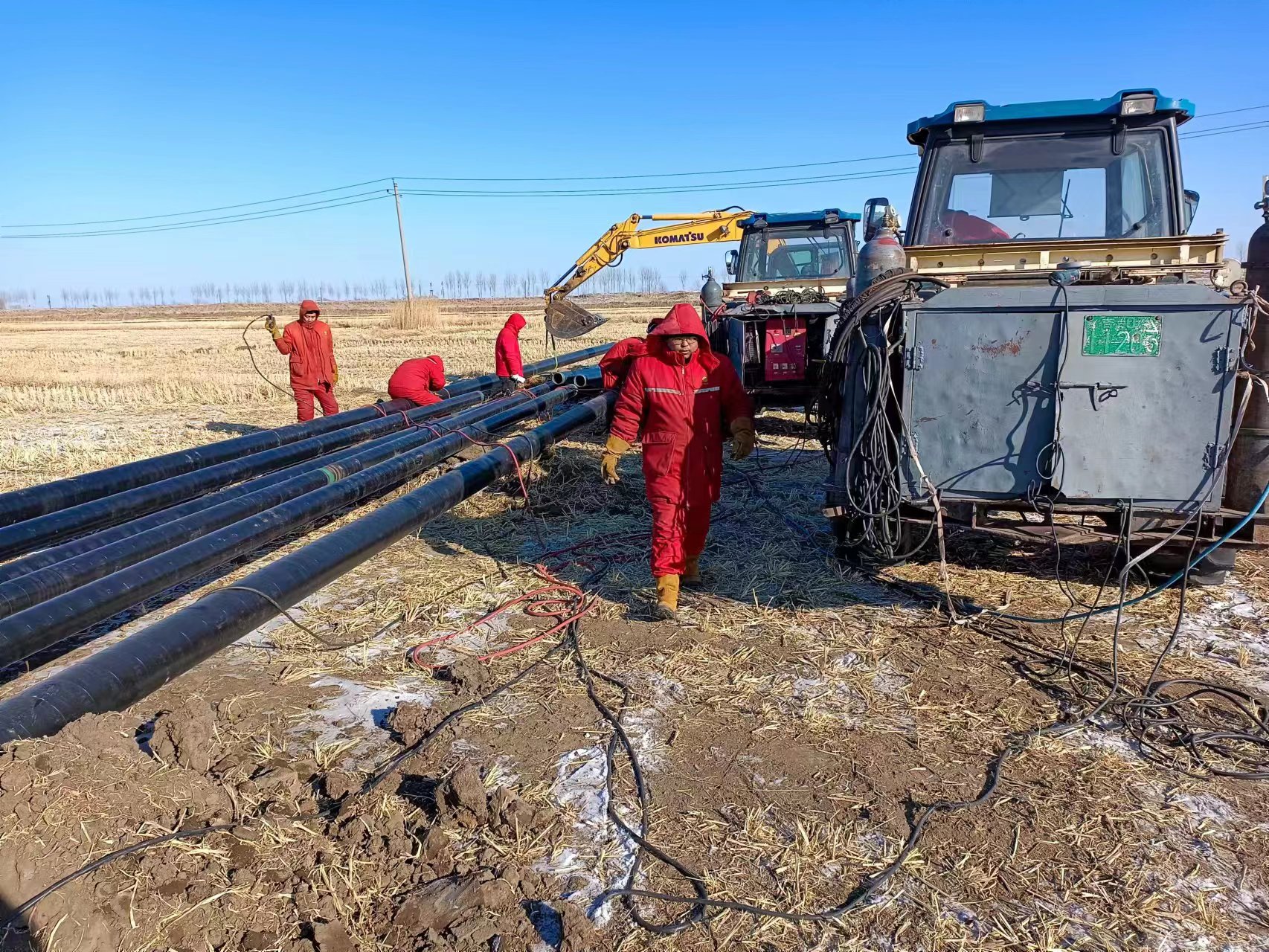
CRA clad pipe is the workhorse of corrosive oil and gas transport. It combines the pressure capacity of carbon steel with the corrosion resistance of a thin CRA (Corrosion-Resistant Alloy) liner. But not all clad pipe is manufactured the same way. The bonding method determines how the pipe performs under pressure, during welding, and through years of thermal cycling.
This article explains the three dominant CRA clad pipe manufacturing processes — Right Spinning Pressure (RSP), explosion bonding, and roll bonding — and how to choose the right one for your project.
1. Why the Bonding Method Matters
In a clad pipe, the carbon steel outer wall carries mechanical loads and pressure. The CRA inner layer protects against corrosive media such as H₂S, CO₂, chlorides, and acids. The critical engineering challenge is creating a bond between the two metals that survives:
- Hydrostatic testing and long-term pressure cycling
- Cutting, beveling, and welding during field installation
- Thermal expansion and contraction during startup/shutdown
- Bending and handling during construction
A weak bond can lead to liner collapse, crevice corrosion, or delamination — each of which can shut down a pipeline. That is why API 5LD, ASME SA-263/264/265, and DNV standards all specify minimum bond strength requirements.
2. Right Spinning Pressure (RSP)
Right Spinning Pressure, or RSP™, is a centrifugal-compression bonding process. A CRA liner tube is inserted into a carbon steel outer pipe. The assembly is rotated at high speed while internal pressure is applied, forcing the liner outward against the outer pipe wall. The combination of pressure and controlled deformation creates a metallurgical bond at the interface.
Key characteristics:
- Bond shear strength typically exceeds the 140 MPa (20 ksi) API 5LD minimum
- Uniform bond along the full pipe length
- Suitable for long pipes and large diameters
- Minimal residual stress compared to explosive bonding
- Excellent for seamless and welded outer pipes
Best for:
- Long oil and gas flowlines
- High-pressure sour gas service
- Subsea and marine pipelines
- Projects requiring consistent bond quality over thousands of meters
3. Explosion Bonding
Explosion bonding uses controlled explosive energy to slam a CRA plate against a carbon steel plate at extremely high velocity. The impact creates a metallurgical wave pattern at the interface, producing a strong bond. The bonded plates are then rolled and welded into pipe.
Key characteristics:
- Very high bond strength and energy absorption
- Can bond dissimilar metals that are difficult to join otherwise
- Typically used for clad plates, then formed into pipe
- More common for thick-wall vessels and short pipe sections
- Longer lead times and higher setup costs for small batches
Best for:
- Heavy-wall pressure vessels and process equipment
- Large-diameter pipe spools
- Applications requiring extreme bond toughness
- Short production runs of thick-walled components
4. Roll Bonding
Roll bonding passes a CRA plate and a carbon steel plate through a rolling mill under high pressure and, often, elevated temperature. The reduction in thickness forces the two surfaces into intimate contact, creating a metallurgical bond. The bonded plate is then formed into pipe by rolling and welding.
Key characteristics:
- Continuous production of clad plate
- Economical for large plate quantities
- Bond quality depends heavily on surface preparation and rolling parameters
- Requires a longitudinal weld seam, which can limit pressure rating
- Less common for high-pressure oil and gas line pipe
Best for:
- Low-pressure tanks and structural applications
- Large plate orders for fabricated equipment
- Applications where cost matters more than seamless performance
5. Process Comparison
| Dimension | RSP | Explosion Bonding | Roll Bonding |
|---|---|---|---|
| Bond mechanism | Centrifugal pressure + deformation | Explosive impact energy | Rolling mill pressure |
| Typical bond shear strength | ≥140 MPa (API 5LD minimum) | High | Moderate to high |
| Pipe length | Long continuous pipe | Limited by plate size | Limited by plate size |
| Seamless option | Yes | No, welded from plate | No, welded from plate |
| Wall thickness range | Wide | Thick walls preferred | Moderate |
| Residual stress | Low | Higher | Moderate |
| Production volume | High, continuous | Batch | High plate volume |
| Common standards | API 5LD, ASME SA-263/264/265 | ASME SA-263, ASTM A263 | ASME SA-263, ASTM A263 |
| Best application | High-pressure oil & gas pipelines | Heavy vessels, thick spools | Tanks, low-pressure fabrications |
6. How to Choose the Right Manufacturing Method
The right process depends on your operating conditions and project priorities:
- Choose RSP when you need long, high-pressure, seamless or welded pipe with uniform bond quality and low residual stress. This is the preferred method for most oil and gas flowlines and subsea pipelines.
- Choose explosion bonding when you need thick-wall vessels, short spools, or extreme bond toughness for severe service conditions.
- Choose roll bonding when you need large quantities of clad plate for tanks, structural components, or low-pressure fabricated equipment.
7. Quality Checks Buyers Should Require
Regardless of the manufacturing method, always request these verifications before accepting clad pipe:
- Bond strength test: shear test results meeting or exceeding API 5LD minimums
- Ultrasonic testing (UT): full-length bond integrity inspection
- Hydrostatic test: pressure test at specified test pressure
- Chemistry and mechanical tests: for both base metal and CRA layer
- Weld procedure qualification: especially for clad pipe end welds and transition joints
- Third-party inspection: BV, DNV, SGS, or equivalent
8. Conclusion
CRA clad pipe manufacturing is not a commodity process. The bonding technology directly affects whether the pipe survives decades in corrosive service. RSP, explosion bonding, and roll bonding each have distinct advantages, but for long, high-pressure oil and gas pipelines, RSP offers the best combination of bond strength, consistency, and scalability.
ZONX PIPE manufactures API-5LD certified CRA clad pipe using RSP™ technology, with liner materials from 304/316L stainless steel to duplex, super-duplex, 825, 625, and titanium. Contact our engineering team to discuss the right manufacturing approach for your next project.