
Pipeline corrosion is a billion-dollar problem across oil & gas, mining, chemical processing, marine, and water infrastructure. Engineers and procurement teams must choose between three common corrosion-resistant pipe types:
- Solid CRA alloy pipe —the entire wall is corrosion-resistant alloy.
- Metallurgically clad pipe —a carbon steel outer wall carries the pressure, while a thin CRA inner layer is metallurgically bonded for corrosion protection.
- Mechanically lined pipe —a CRA liner is inserted into a carbon steel pipe and held by mechanical interference.
Each option trades off cost, corrosion resistance, pressure capacity, weldability, and installation complexity differently. The right choice depends on the operatingenvironment — not on marketing claims. This article provides a technical comparison and selection framework for engineers specifying pipe across multiple industries.
1. Solid CRA Alloy Pipe
Solid CRA (Corrosion-Resistant Alloy) pipe is made entirely from alloy material such as 316L, 2205 duplex, 825, or 625. It offers the highest corrosion resistance and behaves like a single-material pipe during fabrication and welding.
Best for:
- Extreme corrosion environments
- Small diameters and complex geometries
- Applications where any risk of bond or liner failure is unacceptable
- High-temperature service above 350°C
Limitations:
- Material cost is 2–3× higher than bi-metal alternatives
- Large diameters and long pipelines become prohibitively expensive
- Alloy supply can be constrained for large projects
2. Metallurgically Clad Pipe
Clad pipe combines a carbon steel outer pipe for structural strength with a thin CRA inner layer for corrosion protection. The two metals are bonded metallurgically — at the molecular level — so the CRA layer acts as part of the pipe wall.
ZONX DURACORE™ is a metallurgically clad pipe manufactured using proprietary Right Spinning Pressure (RSP™) technology. It achieves bond shear strengths well above the 140 MPa (20 ksi) minimum required by API 5LD. This means the liner stays bonded during cutting, welding, bending, and thermal cycling.
Best for:
- Oil & gas flowlines and risers
- Sour gas service (H₂S)
- High-pressure mining slurry
- Chemical processing with thermal cycling
- Marine and subsea applications
Limitations:
- Requires transition weld overlay at joints
- Higher cost than mechanically lined pipe
- Lead time can be longer than solid alloy for small quantities
3. Mechanically Lined Pipe
Mechanically lined pipe uses a CRA liner inserted into a carbon steel outer pipe. The liner is held in place by mechanical interference, not metallurgical bonding. This makes it the lowest-cost option but also the most limited in performance.
ZONX AQUACORE™ is a lined stainless steel pipe designed for low-pressure, ambient-temperature applications such as drinking water, fire protection, and building plumbing.
Best for:
- Drinking water and municipal systems
- Fire protection
- Low-pressure chemical wastewater
- Static, ambient-temperature service
Limitations:
- Bonding is limited to mechanical interference; no metallurgical bond. End seals required at cuts and welds.
- Risk of liner buckling under bending
- Not suitable for high-pressure or severe thermal cycling
4. Head-to-Head Comparison
| Dimension | Solid CRA | Metallurgically Clad | Mechanically Lined |
|---|---|---|---|
| Construction | Single-material alloy wall | Carbon steel + metallurgically bonded CRA liner | Carbon steel + mechanically fitted CRA liner |
| Corrosion resistance | Excellent | Excellent | Good |
| Pressure rating | High | High | Moderate |
| Bonding | Homogeneous CRA wall | Metallurgical bond (≥140 MPa shear) | Mechanical interference fit |
| Cost vs solid CRA | 100% baseline | 30–50% lower | 40–60% lower |
| Weight | Heavy | Light | Light |
| Weldability | Standard CRA welding | Requires transition weld overlay | Standard, end seals needed |
| Bending | Standard | Standard | Limited |
| Cutting | Standard | Standard | Requires care |
| Max size | Unlimited | DN15–DN1400+ | Typically ≤ DN600 |
| Temperature range | Alloy-dependent | -20°C ~ 350°C | -20°C ~ 200°C |
| Key standards | ASTM A312, A790 | API 5LD, ASME SA-263/264/265, DNV-ST-F101 | API 5LD, DNV-OS-F201 |
5. Selection by Application
Oil & Gas: Sour Gas and High-Pressure Flowlines
Sour gas containing H₂S demands reliable corrosion resistance under pressure and thermal cycling. Metallurgically clad pipe (DURACORE) is the standard choice for flowlines, risers, and manifolds where liner delamination is not an option.
Mining: Slurry and Tailings
Mining slurry is abrasive and corrosive, often at pH < 2. For high-pressure concentrate pipelines, clad pipe with duplex or super-duplex liners (2205/2507) withstands both corrosion and abrasion. For low-pressure tailings or water lines, lined pipe may be acceptable.
Chemical and Petrochemical: Acids and Chlorides
Chlorides and acids destroy carbon steel quickly. When combined with thermal cycling, mechanical liners can fail due to expansion mismatch. Metallurgically clad pipe is preferred for reactors, heat exchanger piping, and acid handling systems.
Marine and Seawater Cooling
Seawater contains >20,000 ppm chlorides. Clad pipe with super-duplex or titanium liners resists chloride stress corrosion cracking. For low-pressure intake lines, lined pipe may be a cost-effective alternative.
Municipal Water and Fire Protection
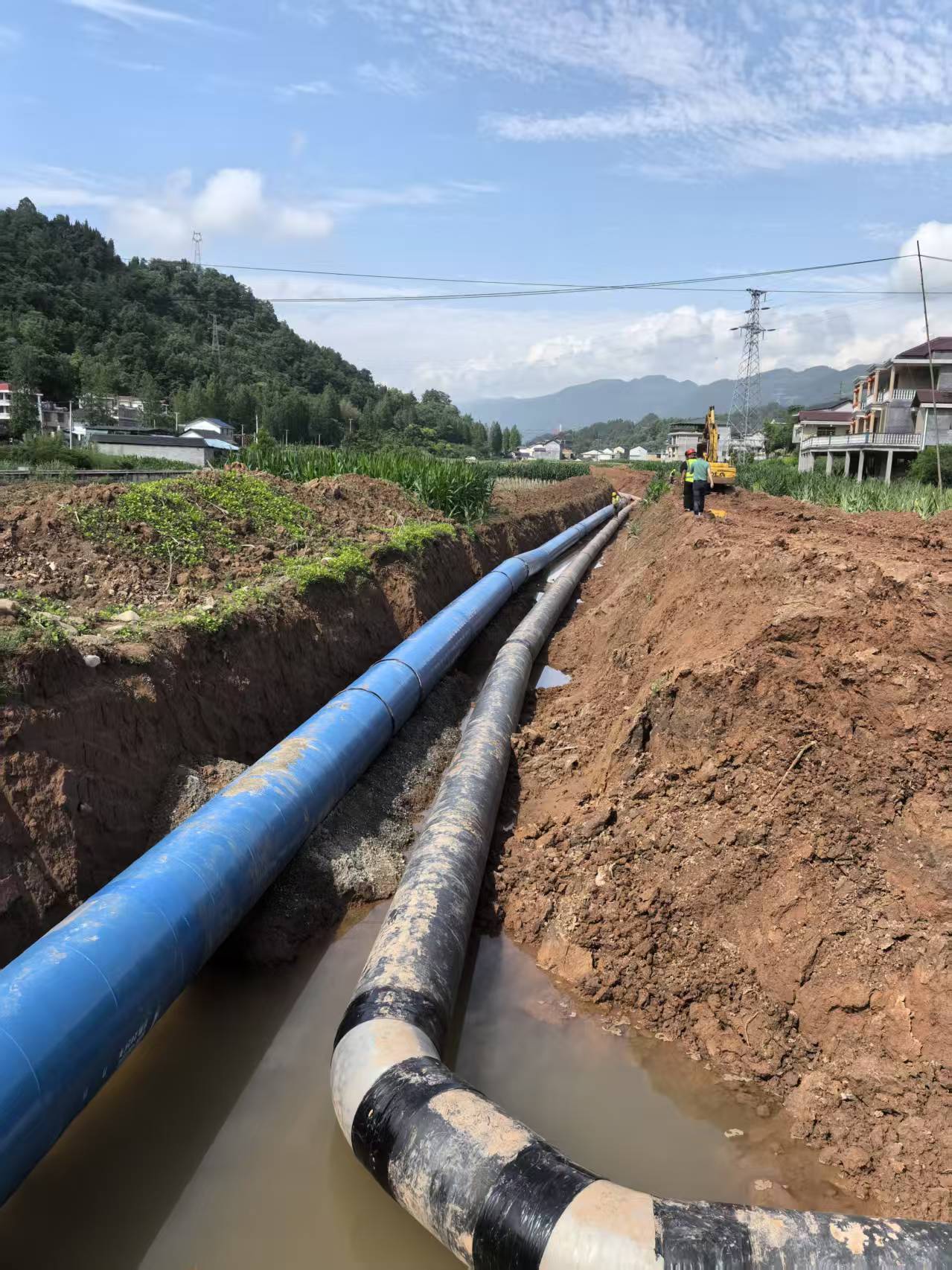
For drinking water, fire protection, and building plumbing, pressure and temperature are low. Mechanically lined stainless steel pipe (AQUACORE) provides a food-grade 304/316L inner surface at a fraction of solid stainless cost.
Power Generation and Desalination
High-pressure steam and condensate systems require pressure capacity plus corrosion resistance. Enhanced stainless steel pipe (POWERCORE) or clad pipe handles these conditions, depending on pressure and temperature.
6. Common Specification Mistakes
- Specifying lined pipe for high-pressure service. Mechanical liners can deform or buckle under pressure. Above 2.5 MPa or under thermal cycling, clad pipe is the safer choice.
- Assuming clad pipe is always more expensive than solid CRA. For large diameters (DN > 300), clad pipe is often 30–50% cheaper than solid alloy.
- Ignoring end-seal requirements for lined pipe. Every cut and weld in lined pipe requires end sealing.
- Choosing alloy grade based on habit, not media. 316L is not always the right answer. Duplex 2205, 825, 625, or titanium may be required.
7. Conclusion
There is no single "best" corrosion-resistant pipe. The right choice is the one that matches your operating conditions:
- Solid CRA alloy when corrosion is extreme and budget is secondary.
- Metallurgically clad pipe when you need carbon steel strength plus CRA corrosion resistance under pressure and thermal cycling.
- Mechanically lined pipe when pressure is low, temperature is stable, and cost is the primary driver.
ZONX manufactures all three construction approaches through the DURACORE™, AQUACORE™, and POWERCORE™ product lines, with sizes from DN15 to DN1400 and liner materials from 304 to titanium. If you are unsure which construction fits your project, send us your operating conditions and our engineering team will recommend the optimal material combination.